

Como dizer “haverá” em inglês? Aprenda a usar “there will be”
Veja como usar there will be para falar de coisas que existirão ou acontecerão no futuro e aprenda outras combinações como there would be, there might be e there should be.
Para dizer “haverá” em inglês, usamos there will be. A estrutura serve tanto para singular quanto para plural: There will be a meeting tomorrow significa “Haverá uma reunião amanhã”, enquanto There will be many people there significa “Haverá muitas pessoas lá”.
Resumo rápido
- there is / there are = há / existe / existem.
- there was / there were = havia / houve.
- there will be = haverá.
- there would be = haveria.
Filmes de ficção científica adoram imaginar como será a vida no futuro. Carros podem voar, robôs podem cuidar da casa e cidades podem existir no espaço.
Para falar que alguma coisa existirá ou acontecerá no futuro, uma estrutura muito importante é there will be.

O que significa there will be?
There will be é uma combinação usada para dizer “haverá”, “vai haver” ou, dependendo da frase, que alguma coisa existirá no futuro.
there will be
haverá / vai haver
Como usar there will be em frases?
I don’t think there will be many things for us to see there.
Eu não acho que haverá muitas coisas para vermos lá.
There will be a car waiting for you at the airport.
Haverá um carro esperando por você no aeroporto.
I’m sure there will be some salad for the vegetarians at the barbecue.
Tenho certeza de que haverá salada para os vegetarianos no churrasco.
There will be a lecture in the school auditorium tomorrow morning.
Haverá uma palestra no auditório da escola amanhã de manhã.
Qual é a diferença entre there is, there are, there was, there were e there will be?
A estrutura muda de acordo com o tempo sobre o qual estamos falando.
| Tempo | Estrutura | Ideia em português |
|---|---|---|
| Presente, singular | there is | há / existe |
| Presente, plural | there are | há / existem |
| Passado, singular | there was | havia / houve |
| Passado, plural | there were | havia / houve |
| Futuro | there will be | haverá / vai haver |
there is / there are
há / existe / existem
there was / there were
havia / houve
there will be
haverá / vai haver
Como dizer “haveria” em inglês?
Para falar de uma situação hipotética, possível sob determinada condição ou vista a partir de outro contexto, podemos usar there would be.
there would be
haveria
There would be a pool party in case the weather was good this weekend.
Haveria uma festa na piscina caso o tempo estivesse bom neste fim de semana.
I guess there would be more people in the audience if the prices were lower.
Acho que haveria mais pessoas na plateia se os preços fossem mais baixos.
She told me there would be no time to make another cake for the wedding.
Ela me disse que não haveria tempo para fazer outro bolo para o casamento.
Como dizer “poderia haver”, “deveria haver” e “deve haver” em inglês?
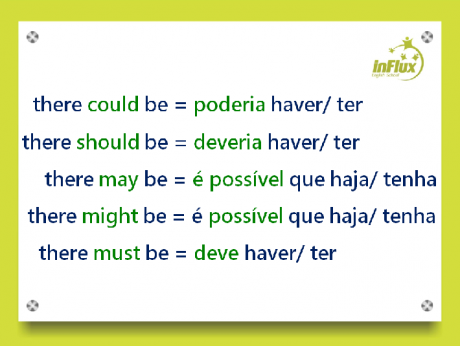
Também podemos combinar there + verbo modal + be para expressar possibilidade, recomendação ou dedução.
| Estrutura | Ideia comum em português |
|---|---|
| there might be | talvez haja / pode ser que haja |
| there may be | pode haver / é possível que haja |
| there could be | poderia haver / pode haver |
| there should be | deveria haver |
| there must be | deve haver |
I’m not sure, but there might be another test by the end of the semester.
Não tenho certeza, mas talvez haja outra prova até o fim do semestre.
There could be more music in the show.
Poderia haver mais música no programa.
Do you believe there may be life on other planets?
Você acredita que possa haver vida em outros planetas?
There should be more trains during rush hour.
Deveria haver mais trens nos horários de pico.
He’s coming to work by bike. There must be something wrong with his car.
Ele está vindo trabalhar de bicicleta. Deve haver alguma coisa errada com o carro dele.

Resumo: como dizer “há”, “havia”, “haverá” e “haveria” em inglês?
| Português | Inglês |
|---|---|
| há / existe | there is |
| há / existem | there are |
| havia / houve | there was / there were |
| haverá | there will be |
| haveria | there would be |
| talvez haja | there might be |
| poderia haver | there could be |
| deveria haver | there should be |
| deve haver | there must be |
Como aprender essas estruturas sem traduzir palavra por palavra?
Em vez de tentar montar cada frase a partir do verbo português haver, vale memorizar as combinações completas.
Pense em there will be, there would be, there might be, there should be e there must be como blocos de linguagem.
É a mesma lógica dos chunks: você aprende a combinação que realmente aparece na comunicação, e não palavras isoladas.
- Crie uma frase com there will be.
- Transforme a mesma ideia usando there would be.
- Faça uma previsão com there might be.
- Crie uma recomendação com there should be.
- Use there must be para fazer uma dedução.
Continue aprendendo inglês com chunks
Perguntas frequentes sobre there will be
Como dizer “haverá” em inglês?
Para dizer “haverá”, usamos there will be. Por exemplo: There will be a meeting tomorrow significa “Haverá uma reunião amanhã”.
O que significa “there will be”?
There will be pode significar “haverá”, “vai haver” ou indicar que alguma coisa existirá no futuro.
There will be serve para singular e plural?
Sim. No futuro, usamos there will be tanto com singular quanto com plural. Podemos dizer There will be a party e There will be many people.
Como dizer “haveria” em inglês?
Para dizer “haveria”, usamos there would be.
Como dizer “deveria haver” em inglês?
Uma combinação muito comum é there should be. Por exemplo: There should be more buses significa “Deveria haver mais ônibus”.
Como dizer “poderia haver” em inglês?
Podemos usar there could be. Dependendo do contexto, a combinação transmite a ideia de “poderia haver” ou “pode haver”.
O que significa “there might be”?
There might be indica possibilidade e pode equivaler a “talvez haja” ou “pode ser que haja”.
O que significa “there must be”?
There must be costuma ser usado para uma dedução forte. Pode equivaler a “deve haver”.
Qual é a diferença entre there is, there was e there will be?
There is fala do presente, there was fala do passado e there will be fala do futuro.
Aprenda inglês por combinações que fazem sentido
Conheça os cursos da inFlux e veja como o método exclusivo com chunks trabalha vocabulário, estrutura, pronúncia e comunicação em situações reais.
Conhecer os cursos da inFlux